




Profile Mozambique: Could you begin by explaining to the Mozambican public how your model works, combining innovation, digital design, and local response, and which regions in Mozambique are your primary targets?
Gaspar Buque: We’ve led Field Ready since its establishment in Mozambique, where we have been operating for seven years. The group’s origins are in the United Kingdom, with headquarters in London, and we also operate in Ghana and Nigeria. As a business group, we have a consolidated global presence with over 30 years of experience across several sectors, particularly in the energy sector, with projects developed on every continent.
What we’ve observed in the various markets where we operate is that young people face similar challenges when trying to enter the workforce, regardless of their level of education, whether they hold basic, technical, undergraduate, or even master’s degrees.
Employers frequently report that recent graduates often lack the practical skills required for employment. When we share these findings with educational institutions, we discover a significant gap between them and the industrial sector. Schools tend to design curricula based on assumptions, without real alignment with the needs of the labour market.
It is precisely this disconnect that we aim to address, by building a bridge between education and employment, so that Mozambican youth can gain real and sustainable job opportunities in sectors that are strategic for the country’s economic development.
PM: Field Ready recently established a presence in Mozambique focused on technical skills development and youth employability. When did your operations begin and how did you adapt to the local context?
GB: Our main objective is to maximise youth employability opportunities through awareness and training actions delivered via our digital platform. ExxonMobil funded free access to the Field Ready platform, where our employability modules are available, including a dedicated Health, Safety and Environment (HSE) module, which was developed from scratch in partnership with ExxonMobil and with input from national experts.
This tool is designed to prepare youth for future employment within the ExxonMobil-led Area 4 project and will allow 10,000 Mozambican youth to access this module free of charge by the end of this year. The goal is to ensure that, by the time a final investment decision is made, the country has a pool of young professionals with strong safety competencies, essential in this high-risk sector.
It is a proactive and strategic approach that aims to ensure greater efficiency and safety during workforce mobilisation.
Since the launch of the HSE programme, the Field Ready platform has registered about 4,000 new users in just two months. Currently, the platform hosts more than 14,000 registered youthnationwide, showing high levels of interest and the importance of this initiative.
PM: You recently signed a MoU with UP Maputo and established a partnership with CFM to promote youth employability. How do these initiatives strengthen your reach and contribute to the professionalisation of Mozambican youth?
GB: We act as a unifying platform for various stakeholders involved in the employability ecosystem. This is not new for us. We already have agreements with multiple institutions, including the former Secretariat of State for Technical and Vocational Education, IFPELAC, and other business and industrial organisations, all aimed at ensuring young graduates have effective access to the labour market.
What we have now done is consolidate and expand relationships that have existed for the past seven years. We’ve recently brought on board Eduardo Mondlane University, Pedagogical University, ISCTEM, and other institutions, as well as public and private companies that rank among the country’s main employers.
Our current network includes active partnerships with ExxonMobil, CFM – Mozambique Ports and Railways, Sasol, Van Oord, Grindrod, MPDC – Maputo Port Development Company, and many others, around 65 institutions across the country.
We all know the anxiety of finishing school and asking ourselves, “What’s next?” or “Where do I look for a job?” Many young people graduate without knowing how to write a CV, how to behave in an interview, or how to approach the job market.
Through the Field Ready platform, young people can access free content and modules that address common skill gaps often left out of traditional academic curricula. Partner institutions are also helping disseminate the platform among their student communities.
Employers within our alliance know that youths enrolled in our platform have already been exposed to employability content, which facilitates smoother integration into the workplace and reduces challenges related to retention or initial adaptation.
PM: Your partnerships with ExxonMobil, ROMPCO, CFM, and UP Maputo suggest an integrated strategy. What criteria do you use to select partners, and how do you ensure alignment between content and labour market needs?
GB: As I always stress, Field Ready does not exist without the value of its alliance. The companies and institutions in this network are the key ingredient in our success. All our content is co-created with them, they help define priorities, develop curricula, and shape the solutions we offer to young people.
Before developing a new programme or employability solution, we host an alliance meeting. There, we identify priority areas, discuss challenges companies face when hiring young people, and determine which skills need strengthening.
This model of co-creation with employers is one of Field Ready’s major differentiators. By involving employers in everything from curriculum design to delivery, we are truly helping companies find highly employable young talent who are ready to meet the demands of the modern labour market.
PM: What quantitative indicators do you use to measure impact, number of certified graduates, job/stage placements, completed projects? Could you share recent data on effective placements?
GB: The platform currently has about 14,000 registered youth, distributed across several provinces, from Zumbo to the Indian Ocean. Although this still represents a small fraction of the more than 14 million young people in Mozambique, our goal is to reach 100,000 users by the end of 2030, significantly increasing the platform’s reach and impact.
Our key success metric is accessibility and effective use of the platform, regardless of digital connectivity constraints. The platform allows for offline access, and once users reconnect to the internet, their data is synchronized, allowing us to monitor their progress.
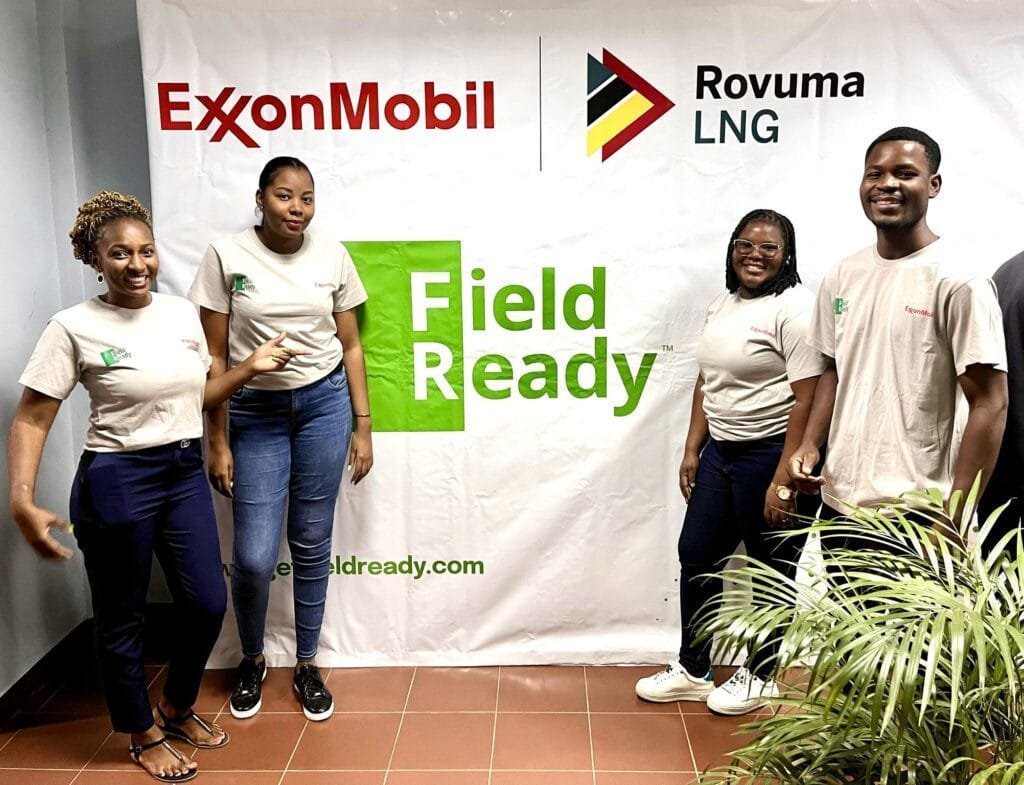
Territorial expansion already includes provinces such as Nampula and Cabo Delgado, where pilot programmes have been implemented. Looking ahead, the focus will be on signing new MoUs with technical and higher education institutions, ensuring final-year students gain direct access to the platform.
We want all institutions delivering final academic cycles in every province to be connected to Field Ready. Only then can we ensure that young people enter the market equipped with the right tools to compete and actively contribute to the country’s growth.
PM: How do you see Field Ready’s role in promoting youth employability, industrialisation, and the transition to a skills-based economy in Mozambique?
GB: Field Ready is a business success story, bringing together more than 65 companies with a shared goal: to train and integrate young Mozambicans into the labour market.
Our model, uniting the industrial sector, training institutions, and employers in a collaborative effort to create, test, and implement demand-driven curricula, was recognised by the African Union in 2021 as one of Africa’s leading innovations in youth vocational training.
This recognition was awarded in acknowledgment of Field Ready’s systemic and inclusive approach, where employers actively participate not only in recruitment but throughout the entire training process, ensuring that new professionals are equipped with the skills that today’s economy demands.
Learn more here: Field Ready