Friday, June 5, 2026
spot_img
Home Blog Page 208

Mozambique to receive 10 million euros in aid from the UK

Moçambique receberá ajuda de 10 Milhões de euros do Reino Unido

The United Kingdom will support Mozambique with an additional 670 million meticais (around 10 million euros) to deal with the humanitarian crisis in Cabo Delgado due to terrorist attacks, as well as the negative impacts of extreme weather events, Radio France International reported on Saturday, March 16.

According to the organization, the announcement was made by the British High Commissioner in the country, Helena Lewis, at the end of her three-day visit to Cabo Delgado province, revealing that the UK is not indifferent to the current situation of new terrorist attacks in districts such as Chiúre.

“Given this situation with new displaced people, we are going to provide more than 8.3 million pounds sterling over the next three years in the area of shelter, mental health, and also for the coordination of the international community, and in a very important area of identity to remake and offer identification documents to displaced people,” stressed Helena Lewis.

She explained that this support is in addition to another provided last year. “We have already provided more than 24 million pounds sterling (1.9 billion meticais) to Cabo Delgado province in terms of humanitarian aid not only in response to the attacks and for displaced people, but also because of climatic events,” concluded Helena Lewis.

Zambia negotiates increase in imports of Mozambican energy to 120 MW

Zâmbia negocia aumento da importação da energia moçambicana para 120 MW

The state-owned Zambia Electricity Supply Corporation (ZESCO) is in negotiations with Electricidade de Moçambique (EDM) to increase the amount of electricity it imports from the country to 120 MW.

“We are actively engaged with EDM to increase firm power imports to 120 MW,” declared Zambian Energy Minister Peter Kapala, noting that ZESCO currently buys between 50 and 90 MW of power from Mozambique and intends to increase this amount to meet demand.

Last October, EDM announced the resumption of electricity sales to Zambia, through ZESCO, in accordance with the contract. The supply could reach 250 MW.

“This is a Power Supply Agreement (PSA) that makes it possible to sell 50 MW firm (during off-peak hours) and another 200 MW non-firm,” explained EDM’s CEO, Marcelino Alberto, at the time.

In 2018, Mozambique interrupted the supply of electricity to Zambia due to a debt of 75 million dollars, which was settled in April 2023, during the official working visit.

Programa de Desenvolvimento Empresarial da Sasol em Moçambique Capacita 20 Empresas Locais

O Plano de Conteúdo Local da Sasol em Moçambique, desenvolvido em colaboração com o Governo de Moçambique, está a demonstrar uma evolução significativa na sua implementação, especialmente na sua componente de Desenvolvimento de Empresas e Fornecedores Locais.

No dia 14 de Março de 2024, realizou-se em Inhassoro, na província de Inhambane, a cerimónia de encerramento do 3.º Ciclo do Programa. Neste evento, 20 empresas dos distritos de Inhassoro e Govuro foram oficialmente reconhecidas pelo seu sucesso durante um programa de formação e mentoria personalizada, com a duração de aproximadamente seis meses.

O objectivo primordial deste programa é capacitar as empresas locais, tornando-as mais competitivas e permitindo que se destaquem de forma mais proativa no mercado. Até à presente data, aproximadamente 160 empresas de diversas regiões do país foram beneficiadas, das quais 110 estão sediadas na província de Inhambane.

Os representantes das empresas beneficiárias expressaram sua gratidão pelos conhecimentos adquiridos durante o programa. Eles enfatizaram o compromisso de utilizar essas capacidades recém-adquiridas para aprimorar suas operações, expandir sua presença no mercado e abraçar oportunidades de crescimento, progresso e sucesso no cenário empresarial de Moçambique.

Este programa destaca-se como uma iniciativa significativa para promover o desenvolvimento económico local, capacitando e fortalecendo as empresas moçambicanas para competir e prosperar num ambiente empresarial cada vez mais dinâmico e desafiador.

Sasol’s Business Development Program in Mozambique Empowers 20 Local Companies

Sasol’s Local Content Plan in Mozambique, developed in collaboration with the Government of Mozambique, is showing significant progress in its implementation, especially in its Local Company and Supplier Development component.

On March 14, 2024, the closing ceremony of the 3rd Cycle of the Program was held in Inhassoro, in the province of Inhambane. At this event, 20 companies from the districts of Inhassoro and Govuro were officially recognized for their success during a personalized training and mentoring programme lasting approximately six months.

The primary aim of this program is to empower local companies, making them more competitive and allowing them to stand out more proactively in the market. To date, approximately 160 companies from different regions of the country have benefited, 110 of which are based in Inhambane province.

The representatives of the beneficiary companies expressed their gratitude for the knowledge acquired during the program. They emphasized their commitment to using these newly acquired skills to improve their operations, expand their market presence and embrace opportunities for growth, progress and success in Mozambique’s business landscape.

This program stands out as a significant initiative to promote local economic development, empowering and strengthening Mozambican companies to compete and prosper in an increasingly dynamic and challenging business environment.

Porquê uma plataforma Finance 4 Sustainable Development (F4SD)?

Em Julho de 2015, em conferência Internacional realizada em Addis Abeba, foram aprovados os 17 Objectivos de Desenvolvimento Sustentável (ODS) que ficaram formalmente inscritos pela Assembleia Geral das NU como a “Agenda 2030”. Agora, quase nove anos após o lançamento desse projecto, as NU lançaram um alerta: “Os Objectivos de Desenvolvimento Sustentáveis (ODS) estão cada vez mais longe de poderem ser realizados até 2030”.

Antes disso, em 2003 um grupo de moçambicanos integrando uma boa diversidade de personalidades com profundo conhecimento da sociedade, da cultura, da política e da economia de Moçambique discutiu durante largos meses uma visão e estratégias da Nação, que ficou conhecida como Agenda 2025. Numa revisão de meio termo, em 2013 constatava-se que apesar do “crescimento económico assinalável de 7% a 8% ao ano nos últimos anos”, a estrutura da economia revelava-se fragmentada com debilidades e fragilidades de vária ordem.

Agora, estamos em 2024. Teoricamente os ODS deveriam estar realizados dentro de seis anos. Mas, uma recente avaliação feita pelas Nações Unidas e apresentada pelo próprio Secretário Geral António Guterres constata o seguinte: (cito)

“Enquanto as economias ricas se recuperaram em grande parte da pandemia de COVID-19, as economias em desenvolvimento perderam terreno. Muitos estão afogados em dívidas, com mais de um terço em risco de crise. O investimento na ação climática e no desenvolvimento sustentável está a ficar muito aquém. A fome e a pobreza estão a aumentar. E as crescentes divisões entre países e economias estão a impedir uma resposta eficaz”.

“… 2024 deverá ser outro ano difícil. Prevê-se que o fraco crescimento mundial continue a abrandar. O investimento continuará a ser fraco. A crise da dívida continuará em espiral, à medida que as obrigações do serviço da dívida atingirem novos patamares. E os conflitos devastadores e a escalada de condições meteorológicas extremas estão a trazer incerteza e risco para a economia global. O resultado: desenvolvimento atrasado e negado.”

As advertências feitas pelos compatriotas moçambicanos que em 2013 trabalharam afincadamente na actualização da Visão e Estratégias da Nação incluíam entre outros aspectos a necessidade de “criação de emprego em volume para aborver a população no mercado de trabalho, e a redução do volume das actividades informais de obtenção de renda”.

E concluíam que “Nos actuais padrões dominantes de acumulação concentrada, a distribuição dos benefícios do crescimento requere mudanças estruturais na economia, no sentido da configuração de bases de acumulação socialmente amplas e sistemas redistributivos mais transparentes e equitativos”.

A Gapi, desde sempre aprendeu a escutar as opiniões e análises de instituições e de personalidades que acima citámos e cuja missão e competência constituem referências obrigatórias na actualização regular da nossa estratégia.

Como instituição financeira de desenvolvimento, estamos cientes do papel que devemos e podemos assumir e realizar para que nem todos os objectivos e metas de desenvolvimento sejam frustrados. Não podemos ignorar as recomendações de instituições internacionais e nacionais, bem como o saber partilhado por personalidades cujo conhecimento é de valia extraordinária.

Os desafios que o país hoje enfrenta são inúmeros e de alguma forma conhecidos. São muitos, mas no quadro da missão da Gapi que é a de:

Contribuir para a inclusão económica, social e financeira em Moçambique, promovendo a inovação, o empreendedorismo e investimentos geradores de emprego

Neste contexto a Gapi prioriza os seguintes temas:

  • A acentuada incapacidade do nosso sector empresarial formal para absorver os cerca de 500 mil jovens que anualmente atingem a idade laboral com consequências no contínuo aumento do número de pobres;
  • O fraco desempenho do tecido produtivo de capital nacional devido a barreiras no acesso a capital e a tecnologia e agravado por processos de desinvestimento motivados por factores induzidos pelo crime dos raptos, pela corrupção entre outros;
  • A persistente fraca inclusão financeira na sociedade em geral com destaque para a discriminação da mulher, em particular nas zonas rurais, impactando negativamente na equidade do género e, com efeito na redução do contributo de milhões de moçambicanas na edificação de uma sociedade mais próspera;
  • A estagnação da produtividade agrícola e da segurança alimentar impactando na crescente dependência da importação de bens alimentares com os inevitáveis riscos de pressões inflacionárias;

Para responder a estes desafios, a Gapi pretende reforçar a sua capacidade de executar a missão que os seus acionistas se propuseram cumprir.

Para tal iniciou-se um projecto de actualização da estratégia da instituição e respectivo modelo de negócios (conforme referenciado pelo nosso PCE).  Nesse projecto já foram melhorados elementos financeiros como a grelha de oferta de produtos de crédito, bem como elementos tecnológicos, designadamente as aplicações de gestão bancária e está em curso a criação de uma infraestrutura para digitalizar procedimentos e processos com impacto na rapidez e qualidade da informação sobre operações em zonas rurais.

Contudo, o desafio da actualização da estratégia da Gapi tem outras componente chave para que o papel e contributo de uma IFD seja mais amplamente assumido e participado.

É nisto que entra a plataforma F4SD. Os objectivos, análises e recomendações apresentadas nas agendas e visões que acima citámos continuam a inspirar a estratégia da Gapi. Consideramos, porém, que podemos e devemos internalizar na nossa rede e alargar a informação e o debate sobre os ODS e sobre as estratégias de desenvolvimento que sejam relevantes para a nossa missão como IFD.

Clarifico que este é um espaço gerido pela Gapi, com as responsabilidades legais que assumimos perante as autoridades que licenciam meios de comunicação. Mas, nesta clarificação, sublinho, porém, que este espaço foi criado para ser aberto e mobilizar a participação de entidades que connosco partilhem objectivos e agendas para a edificação de uma sociedade mais justa e de uma economia mais inclusiva com maior equidade.

Ao lançar esta plataforma a Gapi abre-se para ampliar a sua rede de parcerias, e prepara-se também para abrir a sua estrutura acionista.

Com a história e as responsabilidades que temos vindo a assumir, hoje, 34 anos depois da nossa constituição, estamos em condições de promover e participar no debate e no desenvolvimento do conhecimento que sustentem a formulação de estratégias, de programas e, mesmo da monitoria na eficiência de aplicação de recursos alocados ao desenvolvimento.

Por isso, esta plataforma está aberta às entidades que, no quadro e no âmbito da missão e prioridades estejam disponíveis a construir parcerias com a Gapi.

A primeira parceria surgiu com a AMOMIF (Associação Moçambicana de Operadores de Microfinanças) cuja agenda está focada no relançamento da indústria microfinanceira como forma de melhorar a inclusão financeira. Através e fazendo uso desta plataforma os membros da AMOMIF terão espaço para debater e propor soluções para que ODS e estratégias para a inclusão financeira sejam mais bem concebidas e implementadas.

Por: Francisco António Souto (Senior Adviser in Gapi Sociedade de Investimentos SA)

Saiba mais em: Gapi – Sociendade de Investimentos, SI.

Why a Finance 4 Sustainable Development (F4SD) platform?

In July 2015, at an international conference held in Addis Ababa, the 17 Sustainable Development Goals (SDGs) were approved and formally registered by the UN General Assembly as the “2030 Agenda”. Now, almost nine years after the launch of this project, the UN has issued a warning: “The Sustainable Development Goals (SDGs) are increasingly far from being achievable by 2030”.

Before that, in 2003, a group of Mozambicans comprising a wide range of personalities with in-depth knowledge of Mozambique’s society, culture, politics and economy discussed for many months a vision and strategies for the nation, which became known as Agenda 2025. In a mid-term review, in 2013 it was noted that despite the “remarkable economic growth of 7% to 8% per year in recent years”, the structure of the economy was fragmented with weaknesses and fragilities of various kinds.

Now it’s 2024. In theory, the SDGs should have been achieved within six years. However, a recent assessment made by the United Nations and presented by Secretary General António Guterres himself states the following: (quote)

“While rich economies have largely recovered from the COVID-19 pandemic, developing economies have lost ground. Many are drowning in debt, with more than a third at risk of crisis. Investment in climate action and sustainable development is falling far short. Hunger and poverty are on the rise. And growing divisions between countries and economies are preventing an effective response.”

“… 2024 is set to be another difficult year. Weak global growth is expected to continue to slow. Investment will remain weak. The debt crisis will continue to spiral as debt service obligations reach new heights. And devastating conflicts and escalating extreme weather conditions are bringing uncertainty and risk to the global economy. The result: delayed and denied development.”

The warnings issued by the Mozambican compatriots who worked hard in 2013 to update the Nation’s Vision and Strategies included, among other things, the need to “create jobs in volume to absorb the population into the labor market, and to reduce the volume of informal income-earning activities”.

And they concluded that “In the current dominant patterns of concentrated accumulation, the distribution of the benefits of growth requires structural changes in the economy, towards the configuration of socially broad bases of accumulation and more transparent and equitable redistributive systems”.

Gapi has always learned to listen to the opinions and analyses of the institutions and personalities mentioned above, whose mission and competence are obligatory references in the regular updating of our strategy.

As a development finance institution, we are aware of the role we must and can assume and carry out so that not all development objectives and goals are frustrated. We cannot ignore the recommendations of international and national institutions, as well as the knowledge shared by personalities whose expertise is of extraordinary value.

The challenges facing the country today are numerous and somewhat well-known. There are many, but within the framework of Gapi’s mission, which is to:

Contribute to economic, social and financial inclusion in Mozambique by promoting innovation, entrepreneurship and job-creating investments.

In this context, Gapi prioritizes the following issues:

The marked inability of our formal business sector to absorb the approximately 500,000 young people who reach working age every year, with consequences in the continuous increase in the number of poor people;
The poor performance of the productive fabric of national capital due to barriers in access to capital and technology and aggravated by processes of disinvestment motivated by factors induced by the crime of kidnapping, corruption and others;

The persistent low level of financial inclusion in society in general, with an emphasis on discrimination against women, particularly in rural areas, having a negative impact on gender equality and, in effect, reducing the contribution of millions of Mozambican women to building a more prosperous society;
The stagnation of agricultural productivity and food security, impacting on the growing dependence on food imports with the inevitable risks of inflationary pressures;

In order to respond to these challenges, Gapi intends to strengthen its capacity to carry out the mission that its shareholders set out to accomplish.

To this end, a project has begun to update the institution’s strategy and business model (as referred to in our BCP). This project has already improved financial elements such as the credit product offering grid, as well as technological elements, namely banking management applications and the creation of an infrastructure to digitize procedures and processes with an impact on the speed and quality of information on operations in rural areas.

However, the challenge of updating Gapi’s strategy has other key components so that the role and contribution of an IFD is more widely assumed and participated in.

This is where the F4SD platform comes in. The objectives, analyses and recommendations presented in the agendas and visions cited above continue to inspire Gapi’s strategy. We believe, however, that we can and should internalize within our network and broaden the information and debate on the SDGs and development strategies that are relevant to our mission as an IFD.

Let me make it clear that this is a space managed by Gapi, with the legal responsibilities we assume vis-à-vis the authorities that license the media. However, in this clarification, I would stress that this space was created to be open and to mobilize the participation of entities that share with us objectives and agendas for building a fairer society and a more inclusive economy with greater equity.

By launching this platform, Gapi is opening up to expand its network of partnerships, and is also preparing to open up its shareholder structure.

With the history and responsibilities we have assumed, today, 34 years after we were founded, we are in a position to promote and participate in the debate and the development of knowledge that supports the formulation of strategies, programs and even the monitoring of the efficiency of the application of resources allocated to development.

For this reason, this platform is open to organizations that, within the framework and scope of their mission and priorities, are willing to build partnerships with Gapi.

The first partnership came about with AMOMIF (Mozambican Association of Microfinance Operators) whose agenda is focused on relaunching the microfinance industry as a way of improving financial inclusion. Through and using this platform, AMOMIF members will have the space to debate and propose solutions so that SDGs and strategies for financial inclusion are better designed and implemented.

By: Francisco António Souto (Senior Adviser in Gapi Sociedade de Investimentos SA)

Learn more at: Gapi – Sociendade de Investimentos, SI.
Alteração ao regulamento sobre licenciamento e funcionamento das agências privadas de emprego

Foi aprovado o Decreto nº 87/2023, de 29 de Dezembro, que altera o Regulamento de Licenciamento e Funcionamento das Agências Privadas de Emprego, aprovado pelo Decreto nº 16/2018, de 23 de Abril.

As alterações, com o objectivo de ajustar o Regulamento à dinâmica do mercado de emprego, face à abertura de novas oportunidades de emprego no exterior, resumem-se a:

Recrutamento para o estrangeiro

Os titulares de licença especial podem prestar serviços de recrutamento, selecção e envio de trabalhadores moçambicanos a favor de empregadores estrangeiros, ao abrigo do acordos bilaterais e de memorandos de entendimento entre Moçambique e outros países.

Devem, para o efeito, pagar uma taxa equivalente a um salário mínimo do sector não financeiro, por cada trabalhador enviado ao exterior.

O Decreto nº 87/2023 está em vigor desde 29 de Dezembro de 2023.

Changes to the regulation on the licensing and operation of private employment agencies

Decree No. 87/2023 of December 29 was approved, amending the Regulations on the Licensing and Operation of Private Employment Agencies, approved by Decree No. 16/2018 of April 23.

The amendments, with the aim of adjusting the Regulations to the dynamics of the employment market, given the opening up of new job opportunities abroad, are summarized as follows:

Recruitment abroad

Special license holders can provide recruitment, selection and dispatch services for Mozambican workers for foreign employers, under bilateral agreements and memoranda of understanding between Mozambique and other countries.

To this end, they must pay a fee equivalent to one minimum wage in the non-financial sector for each worker sent abroad.

Decree 87/2023 has been in force since December 29, 2023.

Ministério da Indústria e Comércio anuncia início da fiscalização de produtos sem rótulo em língua portuguesa

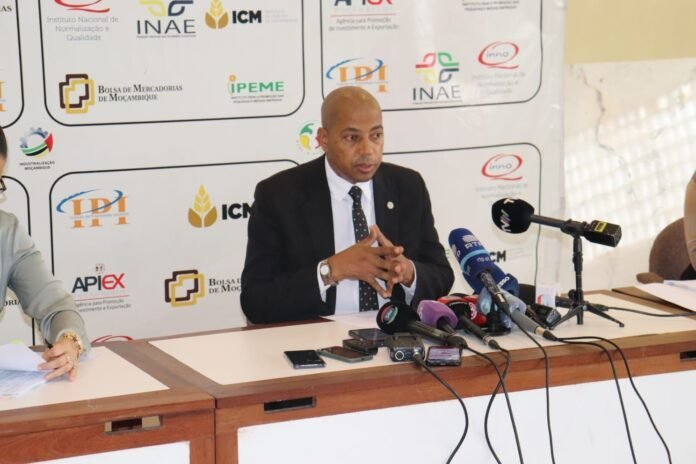
O Ministério da Indústria e Comércio, através do Instituto Nacional de Normalização e Qualidade-IP (INNOQ, IP) e a Inspecção Nacional das Actividades Económicas (INAE, IP), em coordenação com o Ministério da Saúde, realizou hoje, 12 de Março, uma conferência de imprensa com o objectivo de anunciar o início da acção de fiscalização e interdição de importação e comercialização de produtos sem rótulo em língua portuguesa.

A medida, agora em vigor, tem como base a obrigatoriedade estabelecida pelo Decreto 15/2006, de 22 de Junho, que abrange os Requisitos Higiénico-Sanitários de Produção, Transporte, Comercialização, Inspecção e Fiscalização de Géneros Alimentícios.

Durante a ocasião, o Director-Geral do INNOQ, IP, Geraldo Albasini, enfatizou que, além do decreto atrás mencionado, existe o Diploma Ministerial 141/2013, de 23 de Setembro, que aprova o Regulamento de Produtos Pré-medidos, estabelecendo as condições gerais de comercialização e as regras relativas às quantidades nominais aplicáveis aos produtos pré-medidos.

Albasini destacou ainda que o diploma faz menção da Norma Técnica 15, que estabelece os requisitos gerais para a rotulagem dos produtos pré-embalados.

Neste documento, no artigo 20, está referido que sem prejuízo de outras disposições aplicáveis, cada embalagem deve apresentar o nome e endereço do responsável pela colocação do produto no mercado,” destacou.

Esse requisito, segundo o Director-Geral do INNOQ, IP, é fundamental para garantir a rastreabilidade dos produtos e a responsabilidade dos envolvidos na cadeia de comercialização.

Para a Inspectora-Geral da INAE, Rita Freitas, as medidas, agora em vigor, visam garantir que os consumidores tenham acesso a informações claras e compreensíveis sobre os produtos que consomem, promovendo a segurança e a saúde pública.

A representante do Ministério da Saúde, Azália Mucavele, também reforçou a relevância das medidas, destacando a conexão directa entre a rotulagem dos produtos em língua oficial e a saúde pública.

As autoridades ressaltaram que, além da imposição de medidas punitivas em caso de não conformidade, há um esforço educacional para consciencializar os agentes económicos sobre a importância do cumprimento dos dispositivos legais estabelecidos.

Ministry of Industry and Commerce announces start of inspection of products not labeled in Portuguese

The Ministry of Industry and Trade, through the National Institute for Standardization and Quality-IP (INNOQ, IP) and the National Inspectorate for Economic Activities (INAE, IP), in coordination with the Ministry of Health, held a press conference today, March 12, to announce the start of the inspection and banning of the import and marketing of products without a label in Portuguese.

The measure, now in force, is based on the obligation established by Decree 15/2006, of June 22, which covers the Hygiene and Health Requirements for the Production, Transport, Marketing, Inspection and Supervision of Foodstuffs.

On the occasion, the Director General of INNOQ, IP, Geraldo Albasini, emphasized that, in addition to the aforementioned decree, there is Ministerial Diploma 141/2013, of 23 September, which approves the Regulations on Pre-measured Products, establishing the general marketing conditions and the rules on nominal quantities applicable to pre-measured products.

Albasini also pointed out that the law mentions Technical Standard 15, which establishes the general requirements for the labeling of pre-packaged products.

“Article 20 of this document states that, without prejudice to other applicable provisions, each package must bear the name and address of the person responsible for placing the product on the market,” he said.

This requirement, according to the Director General of INNOQ, IP, is fundamental to guaranteeing the traceability of products and the responsibility of those involved in the marketing chain.

For INAE’s Inspector General, Rita Freitas, the measures now in force aim to ensure that consumers have access to clear and understandable information about the products they consume, promoting safety and public health.

The representative of the Ministry of Health, Azália Mucavele, also reinforced the relevance of the measures, highlighting the direct connection between product labeling in the official language and public health.

The authorities stressed that, in addition to imposing punitive measures in the event of non-compliance, there is an educational effort to make economic agents aware of the importance of complying with the established legal provisions.