



Friday, June 5, 2026
spot_img
Home Blog Page 203

Movement of funds via electronic money worries security authorities in the country

Movimentação de fundos via moeda electrónica preocupa autoridades de segurança no país

The National Assessment of Terrorist Financing Risks report warns of a high level of threat posed by the Electronic Money Institutions (EMI) sector in Mozambique. According to the document, published by Lusa, there is an excessive movement of funds to active terrorist threat zones using EMIs operated by telecommunications in the country.

According to the report, active terrorist threat zones prefer to use Electronic Money Institutions because of the ease and speed with which funds can be moved, which makes this sector attractive for possible abuse by terrorists. The mobile money market has been growing in Mozambique, driven by the increase in the number of cell phone users, especially in rural areas, where penetration is higher compared to traditional banking.

In September 2023, the value of the EMIs’ assets stood at 16.9 billion meticais, with an accumulated share capital of 2 billion meticais. The report highlights that only around 30% of the Mozambican population has access to formal financial services, and that the expansion of EMIs has contributed to financial inclusion and facilitated the movement of funds between people.

The document also mentions that at the end of 2021 and beginning of 2022, in Cabo Delgado province, transactions were made mainly in cash and with the use of mobile wallets, due to the weak control of the system. This led terrorists to use these wallets as the preferred mechanism for moving funds channeled by family members, friends, sympathizers and others.

Financial intelligence authorities have been alerting e-money institutions to the movement of large sums of money through these channels, with a view to regularly sending reports of transactions suspected of terrorist financing and money laundering.


Millennium Challenge Account (MCA) será responsável pela gestão de 500 milhões de dólares do MCC

Millennium Challenge Account (MCA) será responsável pela gestão de 500 milhões de dólares do MCC

O Governo moçambicano revelou esta semana a criação do Millennium Challenge Account (MCA) Moçambique, uma instituição temporária responsável pela gestão de 537 milhões de dólares, dos quais 500 milhões são provenientes do Millennium Challenge Corporation (MCC) dos Estados Unidos da América. O MCA Moçambique terá um funcionamento previsto para os próximos sete anos.

O financiamento do MCC, conhecido como Compacto II, inclui projectos como a construção de uma nova ponte sobre o rio Licungo, na província da Zambézia, e uma estrada circular na mesma província, que foi atingida pelos ciclones nos últimos anos.

O projecto da nova ponte sobre o rio Licungo prevê a construção de uma estrutura com 1800 metros de comprimento, localizada cerca de 5000 metros da ponte actual, e a criação de 16 quilómetros de nova estrada de acesso para ligar a ponte à Estrada Nacional N1.

Além disso, o financiamento do MCC contempla projectos de conectividade e transportes rurais, incluindo a construção da variante de Mocuba, estradas rurais e a manutenção de vias. Também estão previstos investimentos em reformas e projectos agrícolas, como a reforma da tributação de investimentos agrícolas e a criação da Plataforma Comercial da Província da Zambézia.

O MCC é uma agência de apoio externo financiada pelo Governo norte-americano, que fornece subsídios a países em desenvolvimento. Este é o segundo financiamento concedido pelo MCC a Moçambique desde 2007, com o objectivo de promover a conectividade e a resiliência costeira no país.

O MCA Moçambique será responsável por garantir que os fundos sejam utilizados de forma eficaz e transparente, contribuindo assim para o desenvolvimento económico do país.

Millennium Challenge Account (MCA) will be responsible for managing more than 500 million dollars of the MCC

Millennium Challenge Account (MCA) será responsável pela gestão de 500 milhões de dólares do MCC

The Mozambican government this week unveiled the creation of the Millennium Challenge Account (MCA) Mozambique, a temporary institution responsible for managing 537 million dollars, of which 500 million come from the Millennium Challenge Corporation (MCC) of the United States of America. The MCA Mozambique will operate for the next seven years.

The MCC funding, known as Compact II, includes projects such as the construction of a new bridge over the Licungo River in Zambezia province and a ring road in the same province, which has been hit by cyclones in recent years.

The project for the new bridge over the Licungo River foresees the construction of a structure 1,800 meters long, located some 5,000 meters from the current bridge, and the creation of 16 kilometers of new access road to connect the bridge to the N1 National Road.

In addition, the MCC funding includes rural connectivity and transportation projects, including the construction of the Mocuba bypass, rural roads and road maintenance. There are also plans to invest in agricultural reforms and projects, such as the reform of the taxation of agricultural investments and the creation of the Zambézia Province Trade Platform.

The MCC is an external support agency funded by the US government, which provides grants to developing countries. This is the second grant awarded by the MCC to Mozambique since 2007, with the aim of promoting coastal connectivity and resilience in the country.

MCA Mozambique will be responsible for ensuring that the funds are used effectively and transparently, thus contributing to the country’s economic development.

Parque Industrial de Beluluane é responsável por cerca de 56,8 mil milhões de meticais no PIB

Parque Industrial de Beluluane é responsável por cerca de 56,8 mil milhões de meticais no PIB

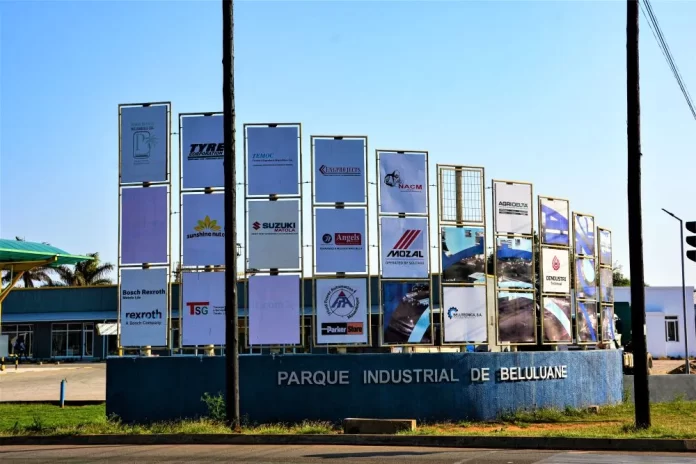
O Parque Industrial de Beluluane, localizado no distrito de Boane, província de Maputo, é um importante polo económico em Moçambique, com 52 empresas instaladas e sob gestão da MozParks, a entidade é responsável por cerca de 900 milhões de dólares (56,8 mil milhões de meticais) em contribuição para o PIB.

As empresas do parque representam uma diversidade de 17 países, incluindo os Estados Unidos da América, Paquistão, Índia, África do Sul, Portugal e Tanzânia. A maioria destas empresas está envolvida na cadeia de valor do alumínio, com destaque para a Mozal, que produz cerca de 500 mil toneladas de alumínio por ano. Parte dessa produção é utilizada localmente pela Midal Cables Internacional na produção de cabos eléctricos, e outra parte é absorvida pelo sector metalomecânico para a produção de acessórios industriais.

Além da indústria do alumínio, o parque também cobre fábricas do sector agro-processador, com destaque para a castanha de caju.

Com cerca de dez mil postos de trabalho criados, o Parque Industrial de Beluluane tem sido um importante impulsionador do emprego na região. Cerca de cinco mil desses empregos estão directamente ligados ao projecto Mozal, enquanto os restantes estão distribuídos por indústrias diversas dentro do parque.

O investimento total na concepção do Parque Industrial de Beluluane ultrapassa os 3,2 mil milhões de dólares (202,2 mil milhões de meticais), sendo que a Mozal contribuiu com mais de 2 mil milhões de dólares (126,4 mil milhões de meticais) para esse montante.

Beluluane Industrial Park is responsible for around 56.8 billion meticais in GDP

Parque Industrial de Beluluane é responsável por cerca de 56,8 mil milhões de meticais no PIB

The Beluluane Industrial Park, located in the district of Boane, Maputo province, is an important economic hub in Mozambique, with 52 companies installed and under the management of MozParks, the entity is responsible for around 900 million dollars (56.8 billion meticais) in contribution to GDP.

The companies in the park represent a diversity of 17 countries, including the United States of America, Pakistan, India, South Africa, Portugal and Tanzania. Most of these companies are involved in the aluminum value chain, most notably Mozal, which produces around 500,000 tons of aluminum a year. Part of this production is used locally by Midal Cables Internacional in the production of electrical cables, and another part is absorbed by the metalworking sector for the production of industrial accessories.

In addition to the aluminum industry, the park also covers factories in the agro-processing sector, especially cashew nuts.

With around ten thousand jobs created, the Beluluane Industrial Park has been an important driver of employment in the region. Around five thousand of these jobs are directly linked to the Mozal project, while the rest are spread across various industries within the park.

The total investment in the design of the Beluluane Industrial Park exceeds 3.2 billion dollars (202.2 billion meticais), with Mozal contributing more than 2 billion dollars (126.4 billion meticais) to this amount.

Manica: Fenómeno El Niño causa destruição de 18 mil hectares de culturas

Manica: Fenómeno El Niño causa destruição de 18 mil hectares de culturas

O distrito de Guro, localizado na província de Manica, enfrenta uma crise agrícola devido ao fenómeno El Niño, que já destruiu cerca de 18 mil hectares de culturas na presente campanha agrária 2023/24. A situação foi revelada pela Agência de Informação de Moçambique, alertando para as consequências sob ponto da segurança alimentar.

Segundo informações, aproximadamente 75 mil famílias, correspondentes a 375 mil pessoas, correm o risco de enfrentar escassez de alimentos nos próximos meses em Guro. O director provincial da Agricultura e Pescas, Ernesto Lopes, explicou que a produção de cereais, hortícolas e leguminosas está seriamente comprometida na região. A falta de água nos campos agrícolas tem sido um dos principais desafios, afectando especialmente os postos administrativos de Nhamassonge, Mandei e Mungari.

Ernesto Lopes destacou a gravidade da situação, considerando o distrito de Guro como semi-árido e descrevendo o cenário como desolador. As autoridades estão a tomar medidas urgentes, incluindo a sensibilização dos produtores para produzirem nas margens dos rios, utilizando sementes certificadas e de ciclo curto. O foco é lançar sementes para a segunda época e aproveitar as zonas baixas dos rios, com o objectivo de produzir hortícolas alternativas e resistentes à seca.

O El Niño também impactou negativamente os distritos de Tambara, Machaze, Macate, Gôndola e Macossa, onde os produtores enfrentaram perdas significativas nas suas culturas.

Para a presente safra agrícola, o distrito de Guro tinha como previsão produzir 92 mil toneladas de culturas diversas, numa área de 50 mil hectares. Na província de Manica, em geral, estiveram envolvidos na campanha agrária cerca de 72 mil produtores, com um plano de produção de 4,4 milhões de toneladas de culturas diversas, com maior destaque para os cereais.

A situação é preocupante e exige uma resposta urgente e coordenada para mitigar os impactos devastadores que o El Niño está a causar na produção agrícola em Manica.

Manica: El Niño phenomenon causes destruction of 18,000 hectares of crops

Manica: Fenómeno El Niño causa destruição de 18 mil hectares de culturas

The district of Guro, located in Manica province, is facing an agricultural crisis due to the El Niño phenomenon, which has already destroyed around 18,000 hectares of crops in the current 2023/24 agricultural campaign. The situation was revealed by the Mozambican Information Agency, warning of the consequences from the point of view of food security.

According to reports, approximately 75,000 families, corresponding to 375,000 people, are at risk of facing food shortages in the coming months in Guro. The provincial director of Agriculture and Fisheries, Ernesto Lopes, explained that the production of cereals, vegetables and legumes is seriously compromised in the region. The lack of water in agricultural fields has been one of the main challenges, especially affecting the administrative posts of Nhamassonge, Mandei and Mungari.

Ernesto Lopes highlighted the seriousness of the situation, considering the Guro district to be semi-arid and describing the scenario as bleak. The authorities are taking urgent measures, including sensitizing farmers to produce on river banks, using certified, short-cycle seeds. The focus is on sowing seeds for the second season and taking advantage of low-lying river areas, with the aim of producing alternative, drought-resistant vegetables.

El Niño also had a negative impact on the districts of Tambara, Machaze, Macate, Gondola and Macossa, where producers faced significant losses to their crops.

For the current agricultural season, the Guro district had planned to produce 92,000 tons of various crops, on an area of 50,000 hectares. In Manica province as a whole, around 72,000 producers were involved in the agricultural campaign, with a production plan of 4.4 million tons of various crops, most notably cereals.

The situation is worrying and requires an urgent and coordinated response to mitigate the devastating impacts that El Niño is having on agricultural production in Manica.

Moçambique enfrenta disputa internacional por licença mineira

Moçambique enfrenta disputa internacional por licença mineira

Moçambique está no centro de uma batalha internacional devido a uma disputa sobre uma licença mineira. De acordo com o Mozambique Mining Journal, duas empresas do segmento mineiro, entraram com uma acção contra o governo no Centro Internacional para Resolução de Disputas sobre Investimentos (ICSID), uma instituição de arbitragem afiliada ao Banco Mundial.

A disputa gira em torno da alegada revogação ilegal de uma licença de mineração, que teria sido transferida sem consentimento para uma entidade não relacionada e posteriormente para a empresa estatal chinesa TZM Resources em 2020. As empresas afirmam ter obtido um veredicto favorável do Supremo Tribunal na Inglaterra em 2012, no entanto, suas tentativas de fazer cumprir a decisão em Moçambique foram infrutíferas.

O desfecho dessa arbitragem é aguardada pelos investidores internacionais, pois uma decisão contra Moçambique pode interferir nos futuros investimentos estrangeiros no sector mineiro do país.

Mozambique faces international dispute over mining license

Moçambique enfrenta disputa internacional por licença mineira

Mozambique is at the center of an international battle due to a dispute over a mining license. According to the Mozambique Mining Journal, two mining companies have filed a lawsuit against the government with the International Center for Settlement of Investment Disputes (ICSID), an arbitration institution affiliated with the World Bank.

The dispute revolves around the alleged illegal revocation of a mining license, which was transferred without consent to an unrelated entity and subsequently to the Chinese state-owned company TZM Resources in 2020. The companies claim to have obtained a favorable verdict from the High Court in England in 2012, however, their attempts to enforce the decision in Mozambique were unsuccessful.

The outcome of this arbitration is awaited by international investors, as a ruling against Mozambique could interfere with future foreign investment in the country’s mining sector.

Find out how Mozambique can market its 45 million carbon credits

Saiba como Moçambique pode comercializar os 45 milhões de créditos de carbono

Carbon credits, conceived by the Kyoto Protocol in 1997, are an essential tool for reducing greenhouse gases and mitigating climate change.
These credits are essential components of a flexibilization mechanism designed to help countries achieve their pollutant emission reduction targets. Considered the “currency” of the carbon market, credits represent the non-emission of carbon dioxide into the atmosphere.

The logic is simple: for every ton of emissions avoided, a carbon credit is generated. Thus, when a country is successful in reducing emissions, it receives Clean Development Mechanism (CDM) certifications and acquires credits available for commercial transactions with nations that have not achieved their targets.

How does the sale work?

The carbon credit market is based on carbon emissions trading and the workings of the Clean Development Mechanism (CDM). Projects approved by the CDM result in the generation of Certified Emission Reductions (CERs), which can be traded with companies, industries or countries that have not achieved their CO2 reduction targets.

The regulation of the carbon market is established by specific legislation in each country. Essentially, the carbon market involves the sale of carbon credits, where a country, after reducing its carbon dioxide emissions, trades with another country that needs to meet its reduction targets but has not yet achieved them. This process creates a global collaborative dynamic to tackle the challenges of carbon emissions.

In 2018, Mozambique adopted national regulations for projects to Reduce Emissions from Deforestation, Forest Degradation and Increase Carbon Reserves (REDD+), a mechanism that recognizes the role of forests in mitigating the effect of climate change, as well as the need to compensate countries that contribute to the effect, through measures that promote forest conservation. In addition, Mozambique has become a member of the African Carbon Markets Initiative and has started to draw up a Carbon Market Activation Plan, with a working group prioritizing the production of a comprehensive and conducive regulatory framework.

Who can sell carbon credits?

Any company with emission reduction projects or small rural producers can generate and sell their carbon credits.

What is Mozambique’s potential for generating carbon credits?

Mozambique has around 45 million carbon credits ready to be traded. The Mozambican Minister of Land and Environment, Ivete Maibaze, said three months before Mozambique’s First Preparation Meeting for its participation in COP28 that the amount could be negotiated with all interested parties.

“The survey carried out by our teams shows that we have around 45 million carbon credits available to be negotiated with all interested parties to complement the agenda for marketing the product,” she said.
He explained that in order to exploit the potential of the carbon market.